
Artprice congratulates Brognon Rollin winners of the 2026 Marcel Duchamp Prize
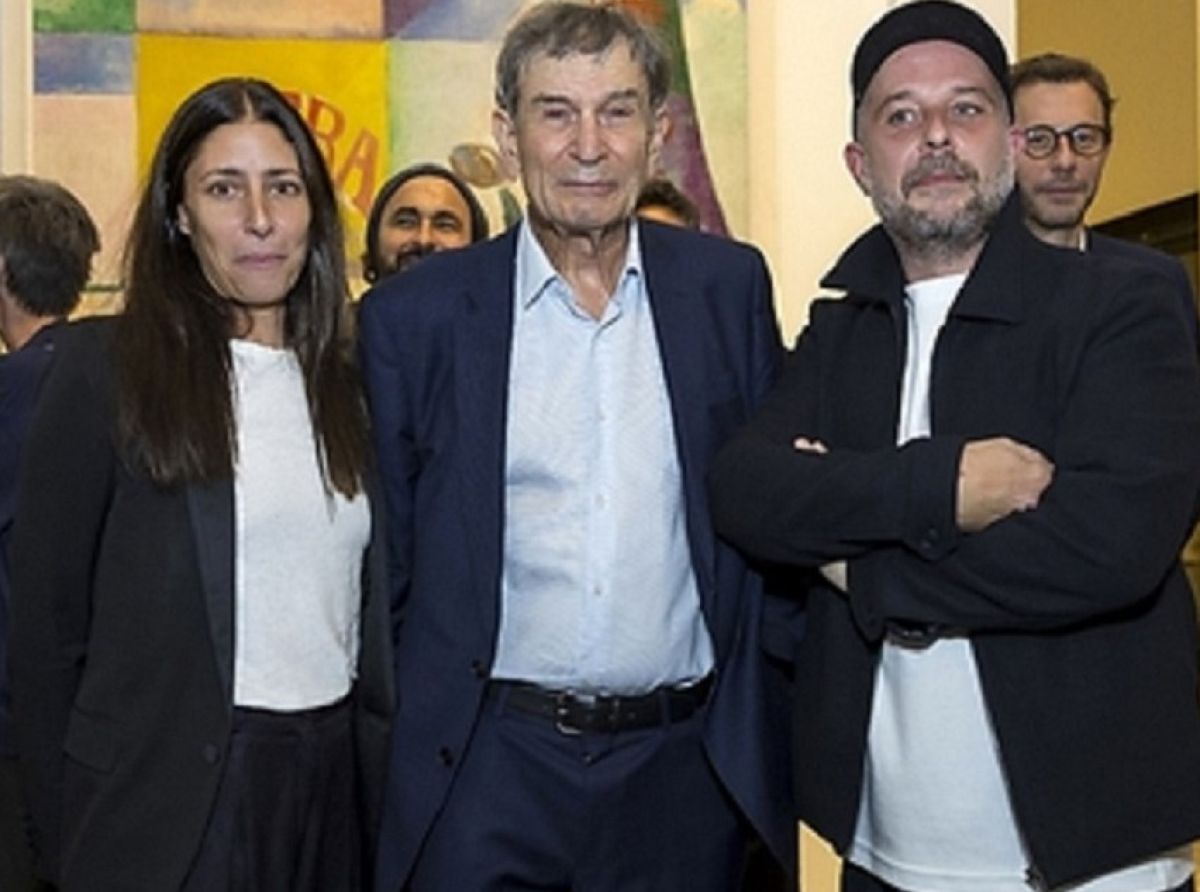
A longstanding partner of the Marcel Duchamp Prize, Artprice by Artmarket congratulates the duo Brognon Rollin, whose award was announced on Thursday, October 22, 2026, by Claude Bonnin, President of ADIAF, at the Musée d'Art Moderne de Paris.
Through an installation built around sobriety tokens, David Brognon and Stéphanie Rollin give tangible form to the time spent in abstinence. Their work establishes a particularly direct connection with Marcel Duchamp's conceptual legacy and places human experience at the heart of creation. The award comes during a Paris Art Week disrupted by the early closure of Art Basel Paris on Friday, October 23, at 7 p.m., ahead of its public weekend, because of planned demonstrations and related security concerns.
At the Musée d'Art Moderne de Paris, the Marcel Duchamp Prize ceremony stands as one of the week's major events, opening a discussion that will continue long after the fair. Established in 2000 by ADIAF, the Association pour la diffusion internationale de l'art français, and organized in partnership with the Centre Pompidou from the outset, the Marcel Duchamp Prize promotes the French art scene internationally. While the Centre Pompidou's historic Beaubourg building undergoes renovation, the Musée d'Art Moderne de Paris is hosting the exhibitions of shortlisted artists and the announcement of the winner from 2025 through 2029.
With a total endowment of €90,000, including €35,000 awarded to the winner, the Prize recognizes four artists or artist collectives each year. ADIAF extends this support through international exhibitions and residencies, notably with Villa Albertine in the United States and the Manufacture de Sèvres. Past winners include Dominique Gonzalez-Foerster, Tatiana Trouvé, Clément Cogitore, Tarik Kiswanson, Gaëlle Choisne, and Xie Lei. Kader Attia, the 2016 winner, served on this year's jury, chaired by Xavier Rey, Director of the Musée national d'art moderne. David Brognon, born in Belgium in 1978, and Stéphanie Rollin, born in Luxembourg in 1980, met at Mudam and have worked together since 2006. Represented by the gallery mfc-michèle didier, they have developed a practice attentive to waiting, confinement, and people living on the margins of society.
Their works take shape through encounters with individual lives and circumstances. Their installation, titled 5,376 Years, 1,892 Months, 1,110 Days, 1,201 Hours, adds together the periods inscribed on the sobriety tokens they have been collecting since 2022. Awarded by support groups to mark milestones in abstinence, these objects bear witness to fragile victories and efforts sustained day after day.
In the dimly lit space, four carnival machines hold the tokens. Their mechanisms keep them in a precarious balance: they never fall. Three wall lights are connected to Kate, who has been sober for eight years and remotely adjusts their intensity according to what she is experiencing. The installation brings the rhythm of an actual human life into the exhibition.
Each token thus represents a period of lived time. The possibility of falling, the waiting, and the perseverance become perceptible. The work opens a meditation on suffering, the effort to hold on, and the vulnerability of existence, extending to the question of mortality. In an intimate and sensitive conversation with thierry Ehrmann, Claude Bonnin, President of ADIAF, emphasized the connection between this work and Marcel Duchamp's approach, as well as its two intertwined dimensions: fully conceptual and profoundly human.
The Marcel Duchamp Prize has always embraced a diversity of practices, from painting and sculpture to video and installation. With Brognon Rollin, the connection to the readymade is particularly clear: preexisting objects, imbued with uses and histories, are relocated and brought together in an arrangement that transforms their meaning. The thought that selects them and establishes relationships among them becomes constitutive of the work.
Marcel Duchamp, a foundational figure for conceptual art, profoundly reshaped the definition of the artistic act. With the readymade, choosing an object, designating it as art, and presenting it in a different context can constitute an act of creation. The work's meaning then engages perception and thought as much as its material fabrication.
Brognon Rollin brings a distinctive human depth to this shift. The token leaves its original use behind and carries the trace of an intimate struggle into public space. The rigor of the installation makes palpable what a number alone cannot convey: the weight of a day endured, the uncertainty of tomorrow, the determination to continue. Stéphanie Rollin sums up this approach in a single sentence: "Our primary material is the human being."
For Artprice, this edition of the Marcel Duchamp Prize extends the discussion into writing: how do we define the act of creation when human thought gives meaning to a form that has not been made entirely by the creator's own hand? This question runs through Dialogue Between a Thinker and AI, the world-book by thierry Ehrmann, founder of Artprice and creator of La Demeure du Chaos. Over forty days and forty nights of dialogue, nearly four hundred and fifty hours, he brought his memories, archives, reasoning, and contradictions into an exchange with artificial intelligence.
In the introductory text The Entrusted Pen, he describes his decision to entrust the writing to AI while continuing the work of thinking, challenging, and correcting, and assuming responsibility for the content.
The connection Artprice proposes concerns the role of intention, experience, and meaning in the creative act. In Brognon Rollin's work, the selection and arrangement of objects make the traces of human lives accessible. In the book, a spoken voice and personal archives sustain a dialogue whose writing is entrusted to AI. In each case, the reader or visitor is invited to look beyond the production process and consider what is being conveyed.
A token can count the days of abstinence; it cannot, on its own, contain all the effort they required. Artificial intelligence can give written form to the story of a life; it has not lived the existence from which that story emerges. This gap gives the question of transmission its full significance: how can deeply personal experience be made shareable?
Duchamp's legacy allows us to pose this question with renewed clarity. Creation can involve the selection, arrangement, and articulation of thought. In the age of AI, this reflection extends to the author's responsibility, the experiences the author brings, and the meaning for which the author answers.
Through its support for the Marcel Duchamp Prize, Artprice backs artists who renew our ways of seeing. With ‘Dialogue Between a Thinker and AI’, thierry Ehrmann offers readers an experiment that questions our ways of writing and passing on experience. The encounter between these two approaches opens a shared space for reflection on the place of human beings in creation.
Curated by Odile Burluraux and Nicolas Liucci-Goutnikov, the exhibition also features Joël Andrianomearisoa, who explores the materiality of emotions through textiles, architecture, and writing; Laura Henno, whose photographs and films follow, among others, people living clandestinely in the Comoros and Mayotte; and Josèfa Ntjam, who combines archives, African mythologies, and science fiction to shift narratives of origin. The exhibition of the four artists shortlisted for the 2026 Marcel Duchamp Prize is on view at the Musée d'Art Moderne de Paris through February 7, 2027, as part of its partnership with the Centre Pompidou and ADIAF. Admission is free. ‘Dialogue Between a Thinker and AI’ will be available in full in French and English, free to read online and download in its Raw Typescript version, under the CC BY-NC-ND 4.0 license.