Colors: Yellow Color

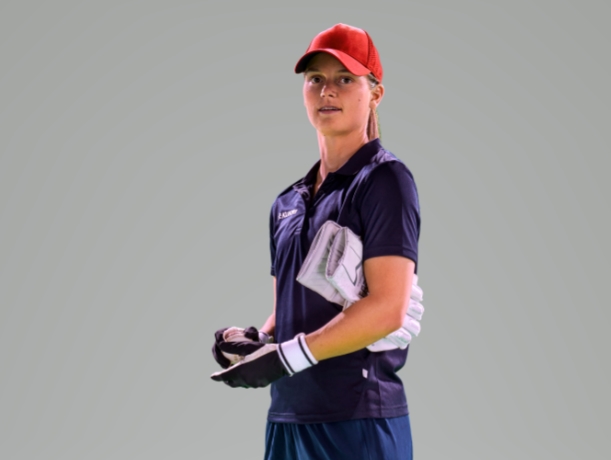
Birmingham cricket star Amy Jones says that competing for gold for Team England at the Birmingham 2022 Commonwealth Games will be “a real light at the end of the tunnel” after a period of lockdown which has seen the 2021 ICC Women’s World Cup postponed. 

Jones grew up in Sutton Coldfield and has more than 90 international caps for England as well as playing county cricket for Warwickshire. She is one of the stars of Birmingham 2022’s latest campaign, celebrating elite athletes with a link to the West Midlands. She will appear on billboards across the region from this week as the build up to the Commonwealth Games continues.

Women’s T20 cricket is part of the Commonwealth Games programme for the first time in Birmingham, and Jones says it is an absolute dream come true to be able to compete in her home city: “With how things are at the moment, I think it will just be a real light at the end of the tunnel and something for everyone to look forward to. I think it’s a brilliant opportunity for the city; all eyes will be on Birmingham for that period of time. I’m proud to be from Birmingham, and having such a global event coming to the city will just be brilliant.”

Birmingham 2022 will be the first time Jones and her England teammates will have competed as part of a multi-sport team, something that she says will add to the already special occasion as he adds: “It’s something that will be extremely special. We’ve never really been part of a bigger team, and being around that whole Team England squad of athletes is something that we’re really looking forward to.”

Amy Jones says the Commonwealth Games will be a chance raise the profile of women’s sport in general and women’s cricket in particular, and she welcomes the decision to award more medals to women than men at Birmingham 2022: “I think it’s the first global event to do that which is a really special occasion and just shows how far women’s sport has come. It’s really nice to see women’s sport being rewarded with more medals, and hopefully we just broaden the reach and attract more and more young girls to take up sport in general.

“Every athlete wants to inspire, and the more people that can see us and see what we do and see how much fun we have when we’re out there, if that comes across to young girls maybe watching cricket for the first time, I think that is hugely important.

“As a team we always try and engage with people that come and watch us and really just make it an experience that makes them want to come back and watch again. Hopefully that will be the case in 2022.”

The current world’s top eight women’s T20 cricket nations are all eligible to compete at the Commonwealth Games (Australia, England, New Zealand, India, South Africa, West Indies*, Pakistan and Sri Lanka), promising an extremely high quality tournament.  England qualify automatically as hosts, with the top six highest ranked sides as of 1st April 2021 also qualifying directly. The eighth spot will go to the winner of a qualifying tournament.

The Birmingham 2022 cricket competition will be held at the iconic Edgbaston cricket ground, home of Warwickshire County Cricket Club. And Amy Jones, who plays for Warwickshire, says that will make the competition even more special: “I first started playing for Warwickshire at under 13 level so it was really where I learned how to play cricket; it’s definitely a special place for me personally. I’ve only been able to play out on the main pitch a handful of times, so just to be able to play out there is one thing, but to represent England out there will be unbelievable, and I’m sure the support we’ll get there will be great as well.”

Amy Jones features in Birmingham 2022’s latest campaign, featuring elite athletes who have an association with the West Midlands. She says it’s an honour to be part of the campaign: “It’s incredible, I don’t think it will have sunk in until I’ve seen a billboard or my family walk past and see it. It’s definitely a bit crazy to be honest but it’s something I’m hugely proud of and I feel very lucky to be one of the athletes that’s up there. It’s definitely something that I’ll not forget.”

-
Former Test Cricket umpire John Holder is suing the ECB (England and Wales Cricket Board) over allegations of racial discrimination during the time in which he worked for the board.  The legal claim that is lodged follows after Holder, and another former umpire Ismail Dawood, accused made accusations of “institutionalised racism”. 

A first-class umpire between 1983 and 2009, Holder related it to his employment, where he became the most notable Black British umpire in England cricket. He (Holder) claims that he was discriminated against on the grounds of race, with his - and Dawood’s - concerns over the fact that no non-white umpires have been appointed to the first-class list since 1992. In November they both asked for an independent investigation from the Equality and Human Rights Commission.

The ECB, who have promised to implement a range of changes, has produced its own report - Racial Equality in Cricket - which has stated that 58% of those consulted believed racism existed in English cricket. Holder and Dawood said that the ECB has “systematically failed to adopt these recommendations”. Holder has also highlighted that his application for a role as an ECB mentor after he retired in 2009 received no response.

“As with all areas of our game, we want our match officials to represent and reflect everyone who supports and plays cricket. Therefore, we announced that we would re‑evaluate the way in which we attract, develop and performance manage our match officials, in order to increase the diversity of our officiating, inspire the next generation of umpires and match referees and ensure a culture of inclusivity and fairness throughout.

“Aligned with this process, we have been arranging to meet with John Holder and others to listen to their experiences so as to better inform our future approach to recruiting and developing umpires and match officials.”

The last state-educated Black cricketer to make a Test debut for England was Michael Carberry in 2010. Carberry has also spoken out on institutional racism in English cricket.

An ECB spokesperson reportedly said: “We are not aware of the detail of this claim from John Holder and are therefore unable to comment upon it. The ECB is absolutely committed to ensuring there is no place for discrimination, of any kind, in our sport.

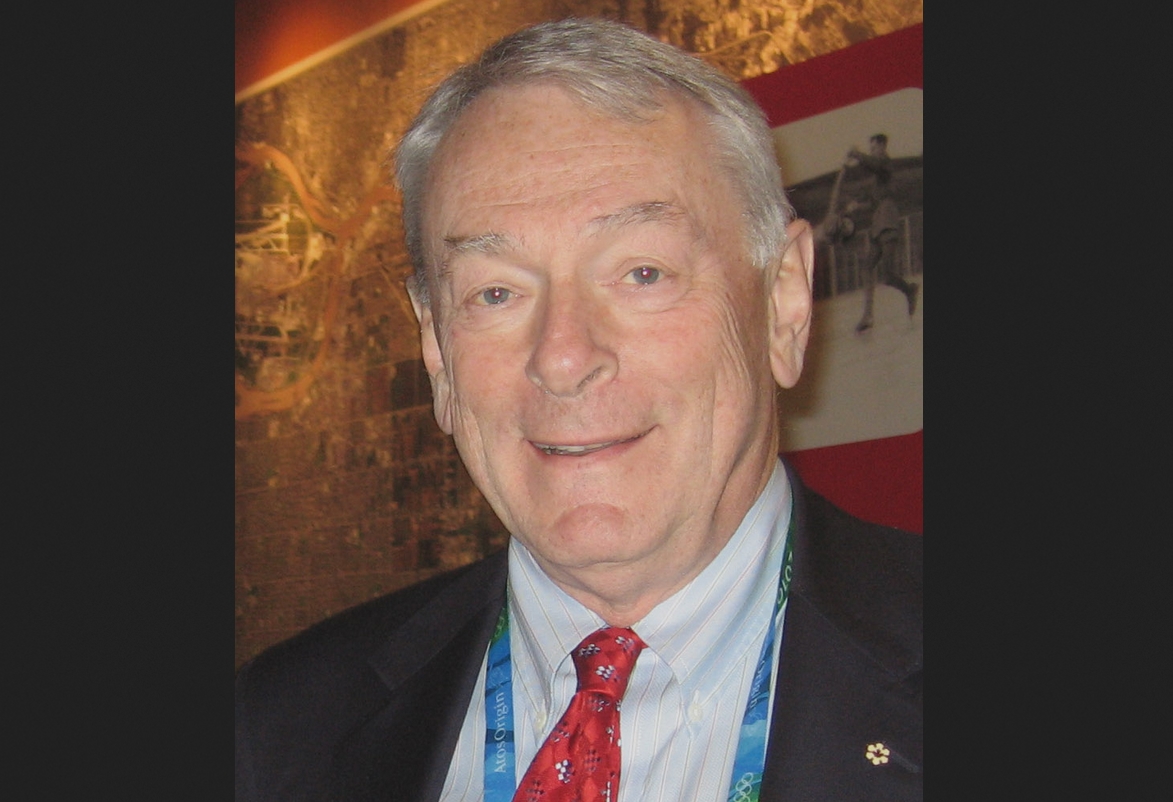
Dick Pound, the longest serving member of the International Olympic Committee (IOC), remains uncertain whether the Tokyo 2020 Games will go ahead. It comes after organisers said they will be ready to host the rescheduled Games - despite the city declaring a state of emergency over Covid-19. Pound said: "I can't be certain because the ongoing elephant in the room would be the surges in the virus." The rescheduled Games are set to take place between 23 July and 8 August.

He added that competitors should be high up the priority list when it comes to getting vaccinated, and also suggested that organisers could make it a condition for them to declare they have received the jab before entering Japan. The IOC earlier stated athletes would not be obligated to do so, but added: "At the same time, the IOC and the International Paralympic Committee are fully aligned in their commitment to have as many foreign participants as possible vaccinated before the Games.

"Athletes are important role models, and by taking the vaccine they can send a powerful message that vaccination is not only about personal health, but also about solidarity and consideration for the wellbeing of others in their communities." Earlier, Japanese Prime Minister Yoshihide Suga said there was a "sense of crisis" as he announced emergency Covid-19 plans. Organisers said: "This declaration offers an opportunity for Tokyo 2020 to plan for a safe and secure Games this summer."

Tokyo recorded 2,447 new Covid-19 cases on Thursday and the latest measures primarily target restaurants and bars, which will be asked to stop serving alcohol by 7pm local time and close an hour later.mCosts for the Games have increased by $2.8bn (£2.1bn) because of the measures needed to prevent the spread of coronavirus. And a recent poll by national broadcaster NHK showed that the majority of the Japanese general public oppose holding the Games in 2021, favouring a further delay or outright cancellation of the event.

Japan has secured rights to at least 540 million doses of vaccines from several Western developers - more than enough for its 126 million population - but the distributor of one of those, Moderna Inc, believes its vaccine is unlikely to win approval in Japan until May owing to requirements for local clinical trials. It would leave a tight vaccination schedule, with the Olympics set to start two months later.

Japan has a requirement for local clinical trials before requesting approval for a vaccine and a trial of the Moderna vaccine, which has already won approval in the United States, Europe, Canada and Israel, is due to start this month. Masayuki Imagawa, the head of the Japan vaccine business for Takeda Pharmaceutical Co, told Reuters it would probably take several more months to complete the trial and said securing approval in May was "the best-case scenario".

Meanwhile, the founder of the charity Sporting Minds, Callum Lea, says the uncertainty over Tokyo 2020 has resulted in an increase in mental health concerns among elite athletes. "We saw quite a big spike in March and April when the first lockdown was in full force, and we've seen another spike in the past month," Lea said. "For Olympic athletes their opportunity comes around once every four years and they could be at the peak of their careers, and a lot of them will know that this is their only chance, or their last chance.

“It is always different for every individual - you have some who will be able to cope with it OK and others who are extremely worried and will start to think that this is the opportunity they have built towards their whole life, and it is slowly starting to slip away."

Back in 2000, former South Africa President Nelson Mandela declared that “sport has the power to change the world.” Two decades years later, 2020 proved how right he was.

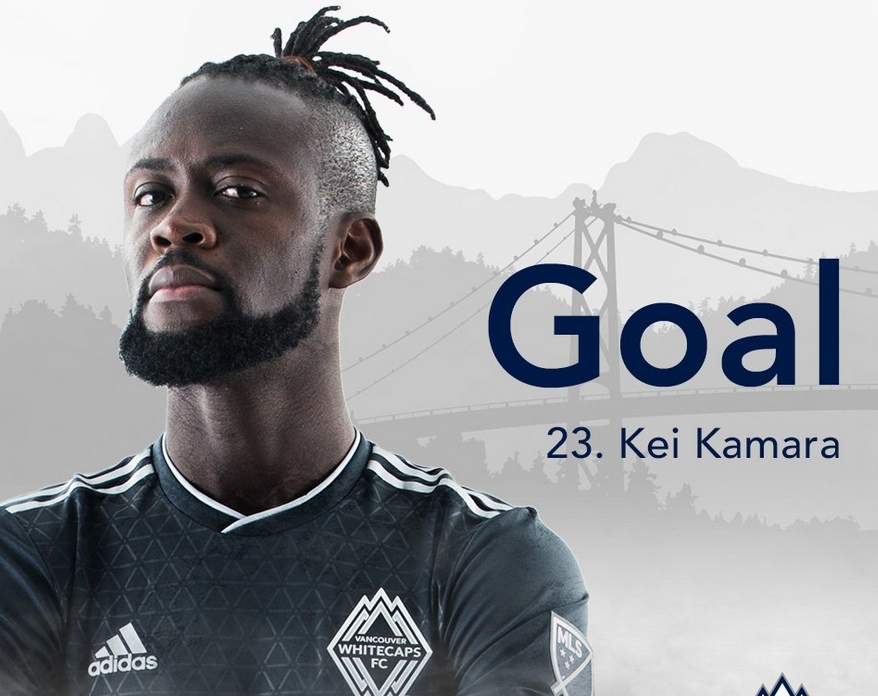
This was a year where athletes of all different talents - footballers; basketballers; track and field stars; tennis players; F1 drivers - from across the world mobilised. They protested against racism. And they demanded change. Sierra Leone's US-based footballer, Kei Kamara - who joined in the protests following the death of George Floyd - said his children and their futures inspired him to make a stance.

"I lay down on the ground for nine minutes and my son actually then just lay down next to me, without me even asking him - and Kendrick is only three," Kamara said. "He just decided to lay next to me. And I turned around and I saw him and it just hit me so hard, like 'wow'.

"I'm so, so grateful to every other race that's standing with us now because it's given us a voice".

2020 was also the year that footballers in the English Premier League began taking a knee before kick-off in show of unity against racism. For the American triple-jump record holder Tori Franklin, sport has the capacity to provoke a shift in people’s mentality and play its part in the fight against racism. I feel like sport can really make a huge impact” Franklin said. “Sport is a big part of American culture. It’s gets a lot of TV time, a lot of press. Athletics teams taking a stand and protesting about something is going to make a huge impact.”

On 26 August 2020, the NBA team Milwaukee Bucks refused to play the fifth game of their playoff series against Orlando Magic following the shooting of African American Jacob Blake by a police officer near their home stadium. This led the NBA not only to reschedule this match, but also all the other games to be played that night. And several other sports followed, supporting the athletes’ decisions to boycott a match: sports including baseball, football and tennis.

For Franklin, every sport has a voice and should speak out against racism - no matter its profile. “Of course, we definitely have a voice," she said. "Our voice is obviously not as big as the NBA, but there have been many athletes who have protested in competition - Gwen Berry in 2019 at the Pan-Americans games, Noah Lyles did it this year, at Monaco (Athletics Diamond League meeting), wearing a glove and putting up the Black fist. "And numerous athletes have been posting on their social media, going out on protesting, just being very involved - myself included."

The biggest platform for athletics is the Olympic Games - an event that, had coronavirus not happened, would have been the focal point of the sporting year. And throughout history, athletes have used the Olympics to bring awareness to social and political issues, something the International Olympic Committee (IOC) does not allow.

In January 2020, with the Tokyo Olympics and Paralympics in sight, the IOC published fresh guidelines explaining the meaning of rule 50, a longstanding rule which states that “no kind of demonstration or political, religious or racial propaganda is permitted in any Olympic sites, venues or other areas.” The IOC explicitly condemned “hand gestures or kneeling” and any “refusal to follow the Ceremonies protocol”.

This came following the incident at the 2019 Pan-American Games which Tori Franklin referred to, when American hammer throw-winner Gwen Berry raised her fist at the end of the medal ceremony and fencing winner Race Imboden knelt down during his medal ceremony to protest against racial inequality in the US. Both were put on a probation for 12 months, and Berry said she lost sponsorship. Such a stand comes with a serious cost for the athletes - not just financial but for their lives too.

The most iconic display of this remains Americans Tommie Smith and John Carlos who stood on the 200m podium shoeless with black socks, black gloves and fists raised at the 1968 Mexico Games. Both, with silver medallist Australian Peter Norman, were also wearing Olympic Project for Human Rights badges.

The Americans were suspended and banned from the Olympic village. All of them were ostracised when they went back to their countries and Australia only officially apologised years after Norman's death. But today, the three men are celebrated as legends and heroes, even by the IOC itself.

At the 2016 Olympics in Rio, the marathon silver medallist Feyisa Lilesa surprised the world when he held up his crossed wrists above his head (as if they were shackled) while he crossed the finish line, a sign bringing awareness to the Oromo protests happening in Ethiopia at that time, against social and political marginalisation. Ethiopia's Prime minister resigned two years later with the new leader implementing many reforms. If the change was not directly caused by Lilesa's stand, there is no doubt he forced the world to look at what was happening in his country at that time. But the IOC's rule 50 is clear - such a demonstration is not allowed at the Olympics.

Tori Franklin says that athletes are trying to find a common ground with the Olympic authorities. “The athletes have created the Athletics Association which is run by a few track and field’s athletes. They’re doing their part as well, trying to urge the US Olympic committee to allow protests within competition without getting punishment for those athletes.”

In the documentary Jesse Owens Returns To Berlin, the legendary Black American athlete - whose dominance at the 1936 Olympics, under Hitler's gaze, proved everything wrong with the Nazi's horrific ideology - says, “there is a bond among athletes of every race, religion and colour that transcends all prejudice.” Sprinter Owens won four golds that Olympics. He knew all about the power of sport to break down racial barriers. An example of it was his friendship with German long jump athlete Luz Long - the physical archetype of Hitler’s Aryan theory - at a time in history when everything in the world seemed to oppose them. But they maintained a shared humanity through sport and, perhaps, their faith.

Some 84 years later, athletes across sports united to make a stand against racism, It may have been sparked by events in the US, but the reaction was global. Look at Burnley captain Ben Mee, seething with barely-contained anger in a live interview in response to a plane being flown over his club's ground with a White Lives Matter banner. “What next?” was the question that followed the NBA Milwaukee Bucks' boycott on 26 August. It’s a long road” said Tori Franklin, reflecting on the year. “But I do think that the things that we are doing are making an impact”.

It will require more than just sport to change the world for better. But history has proved that sport has power; the power to unite people, inspire change, create hope and break down racial barriers.

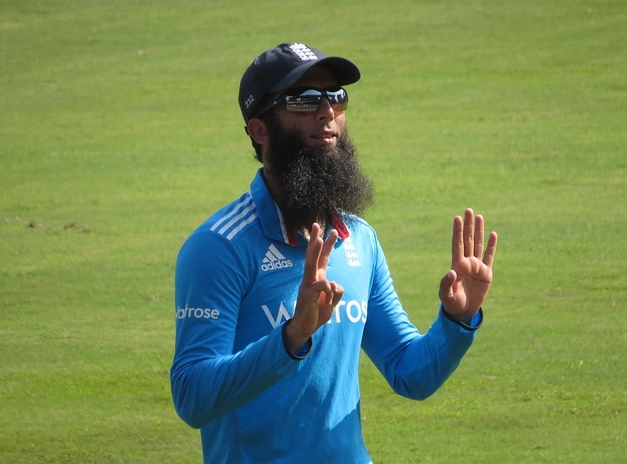
England's touring party in Sri Lanka has been retested for coronavirus after all-rounder Moeen Ali returned a positive result. All of the players and staff had a lateral flow test and PCR at England's base in Hambantota.

The results are expected, with England hoping to be able to train for the first time in the afternoon. Moeen will leave the Hambantota base afternoon to continue his 10-day quarantine in a hotel near Galle.

Fellow all-rounder Chris Woakes was deemed as a possible close contact, having shared a car to the airport with Moeen in the UK, and is observing a period of self-isolation and further testing. The touring party must remain in their hotel rooms until the results are returned.

Meanwhile, it has been learned that Sri Lanka, who lost the second Test against South Africa in Johannesburg on Tuesday, will not face a 10-day quarantine period upon their return to the country. They will fly back on a chartered flight and, as they are transferring from one bio-secure bubble to another, a quarantine period has been deemed unnecessary.

They are expected to have PCR tests before being cleared to play in the two-Test series that starts in Galle on January 14.

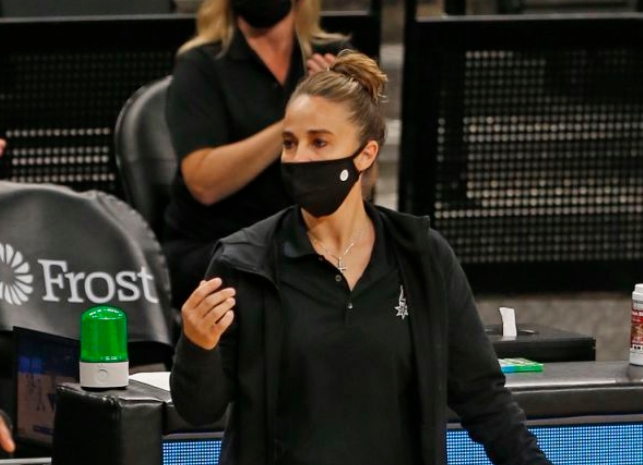
Becky Hammon became the first woman to lead an NBA team after the San Antonio Spurs' head coach Gregg Popovich was ejected against the Los Angeles Lakers. Popovich put assistant coach Hammon in charge after he was removed in the second quarter of the Spurs' 121-107 defeat by the Lakers in Texas.

Hammon, who joined the Spurs in 2014, said: "Obviously it's a big deal and a substantial moment "I try not to think of the huge picture and huge aspect of it because it can be overwhelming.

“I was trying to get the guys in the right spots and trying to get them motivated. Obviously, it’s a learning situation for all of us, but I would have loved to have walked out there with a win with the guys.”

Former WNBA star Hammon, who was the first woman to join an NBA coaching staff, said she did not know she would take charge if Popovich were to be sent off until he pointed at her and said: "You got 'em."

Popovich was thrown out by official Tony Brown after shouting and entering the court when he felt a foul was incorrectly not called.

Scoring double figures for a 1,000th consecutive game, extending his own NBA record, LeBron James led the Lakers with 26 points on his 36th birthday.

"It was a beautiful thing just to hear her barking out calls, barking out sets," he said, “and congratulations to her and for our league."

Lakers coach Frank Vogel said: “Well deserved. I’ve talked to her before and she really knows her stuff and obviously she’s here for a reason. She’s equipped, intelligent (and the) guys have great respect for her. She’s going to be a great coach one day.”

A three-time All-American at Colorado State, Becky played for the New York Liberty and San Antonio Stars in the WNBA as well as overseas before retiring to join Popovich’s staff in 2014.

She is the first full-time female assistant coach in league history.